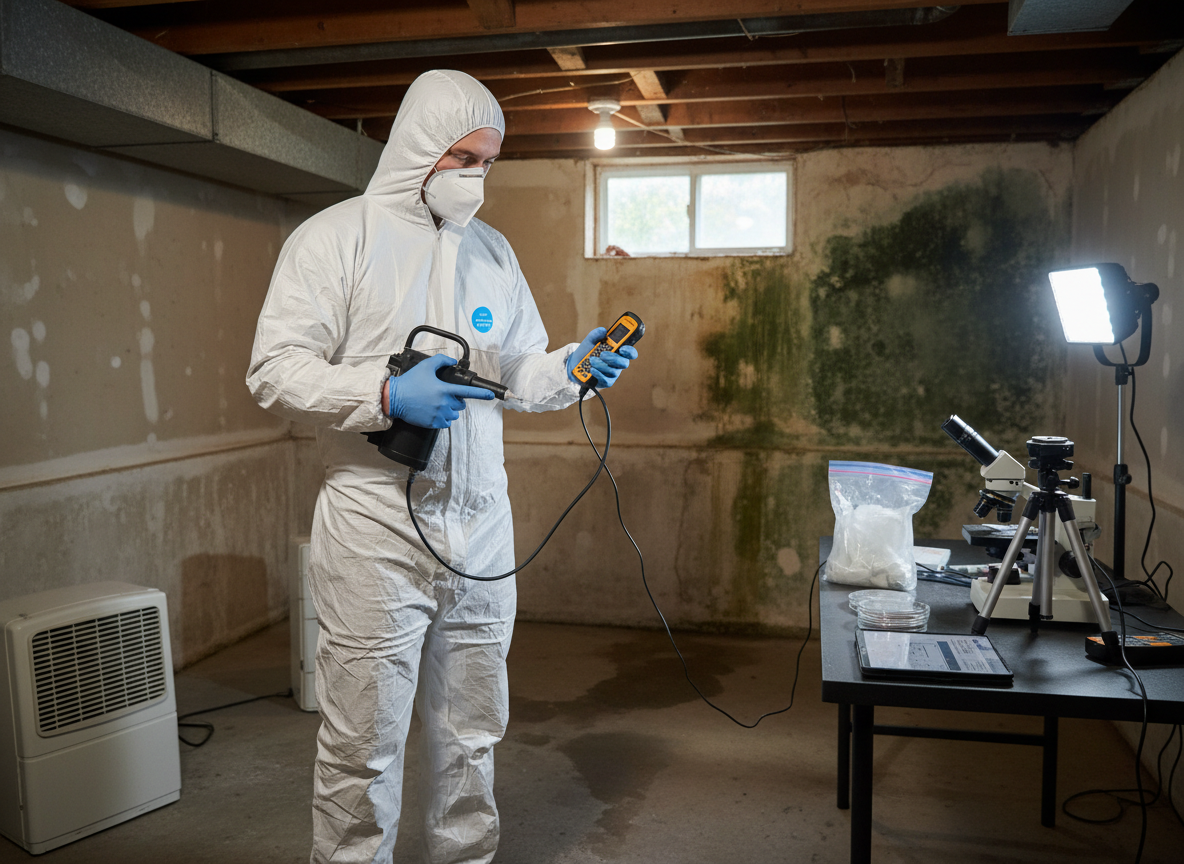
Keene sits in Kern County at the edge of the Tehachapi range where Mediterranean climate swings create repeated condensation cycles inside older single-story homes and ranch-style properties. Temperature drops at night after hot summer days pull moisture into attics and wall cavities, especially in homes built before modern vapor barriers became standard. Air quality and mold testing here requires sampling both living spaces and crawl spaces because spores travel through the open framing common in local construction.
We use spore trap cassettes, tape lifts, and moisture meters calibrated for the dry daytime air that masks damp pockets. Edge cases include testing HVAC returns after dust storms blow through the pass and checking under pier-and-beam floors where irrigation runoff from nearby orchards raises soil moisture. Reports note any visible staining on OSB sheathing or drywall paper that has delaminated from repeated winter humidity spikes.
Testing follows industry protocols for chain-of-custody documentation so results hold up for real estate transactions or insurance claims common in the area. Homeowners often overlook the space above dropped ceilings in garages converted during the 1980s building wave along Woodford-Tehachapi Road. Proper sampling locations account for prevailing wind patterns that push spores from the Tehachapi foothills into Keene neighborhoods.
Seasonal Moisture Patterns
Hot summer afternoons followed by rapid evening cooling in Kern County drive dew points inside poorly ventilated roof cavities. Cool winter nights add another layer when indoor heating creates temperature differentials across single-pane windows and uninsulated walls typical of Keene housing stock.
Technician insight
In Keene, the thing that catches most people out with air quality and mold testing is how the daily swing from 95-degree afternoons to 45-degree nights drives hidden condensation inside unvented attics on homes along Woodford-Tehachapi Road. Homeowners check only living areas and miss the OSB sheathing where spores take hold after each cool winter night.
Hidden Attic Growth After Temperature Swings
A Keene homeowner noticed musty odors only in the evenings. Testing revealed elevated Aspergillus spores in the living room while moisture readings stayed low at floor level. We accessed the attic and found condensation on the north-facing roof deck where cool night air met residual daytime heat trapped in the insulation. Surface samples confirmed active growth on the sheathing; the report guided targeted removal without whole-house disruption.
How it works
- 1
Initial Assessment
Walk the property to map moisture-prone zones created by Keene's temperature swings and note HVAC layout common in local homes.
- 2
Air and Surface Sampling
Collect spore traps indoors and outdoors plus tape lifts from suspect materials while recording relative humidity at multiple points.
- 3
Moisture Mapping
Use meters to scan walls, ceilings, and subfloor areas where cool winter air meets warm interior surfaces in Kern County construction.
- 4
Lab Analysis and Report
Send samples for identification and deliver a written report with findings tied to the specific climate and housing conditions in Keene.
Pricing
Pricing based on square footage, number of samples, and whether crawl space or attic access is required; upfront quotes provided after site visit.