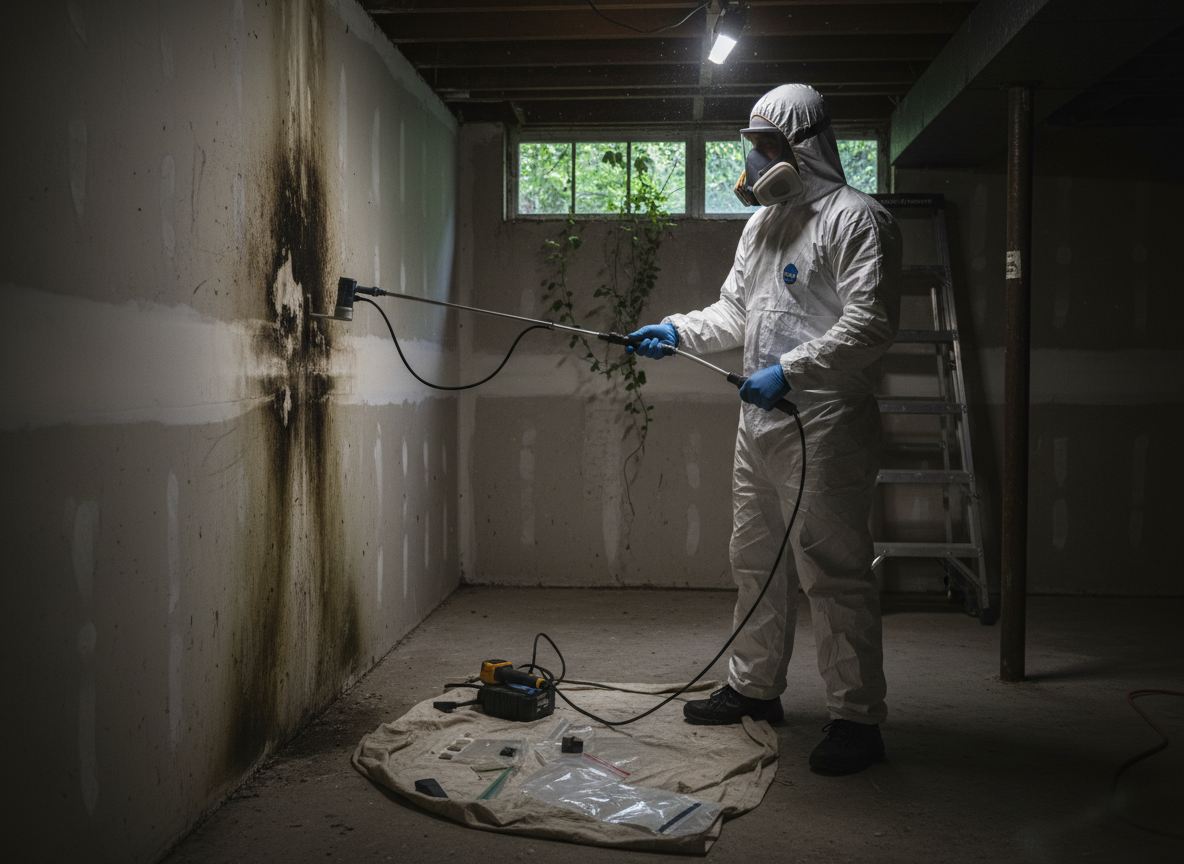
Mold testing in Keene homes starts with understanding how the Mediterranean climate drives moisture cycles. Hot summers dry surfaces quickly while cool winters bring occasional rain that seeps into older Kern County construction, especially around foundations and crawl spaces along routes like Woodford-Tehachapi Road. Technicians focus on air sampling and surface swabs in attics and basements where temperature swings create hidden condensation points that residents rarely notice until odors appear.
Testing protocols account for the mix of ranch-style and older tract homes common in Keene and nearby Tehachapi. These structures often have limited ventilation and original plumbing that can leak behind walls without visible signs. We collect samples from multiple zones rather than single spots because wind-driven moisture from the surrounding hills can affect one side of a property more than another, changing remediation scope.
Results guide whether remediation stays localized or requires broader containment. In Kern County, where soil retains winter moisture longer than coastal areas, we always check exterior grading and downspout discharge before final clearance. Homeowners receive a written report with photos and lab findings that can be shared with insurers or future buyers.
Technician insight
In KEENE, the thing that catches most people out with Mold testing near me is how the cool winter rains soak into the older concrete slabs along Woodford-Tehachapi Road and then stay trapped under flooring when summer heat returns. Homeowners usually test only the obvious bathroom but miss the crawl space where the real growth sits because the terrain slopes toward the house instead of away from it.
Tehachapi Road Crawl Space Testing
A Keene homeowner noticed a musty smell after winter rains but saw no visible growth. We found elevated spore counts in the crawl space where grading directed water toward the foundation. Samples confirmed Penicillium and Aspergillus. Targeted remediation and improved drainage cleared the issue without whole-house disruption.
How it works
- 1
Initial Assessment
Walk through the property noting visible moisture, odors, and past water events while reviewing construction details typical to Keene homes.
- 2
Sample Collection
Take air and surface samples from affected and unaffected areas, including attics and crawl spaces where Kern County temperature swings concentrate mold.
- 3
Lab Analysis
Send samples to an independent lab for species identification and concentration levels.
- 4
Report Delivery
Provide a written report with findings, photos, and recommended next steps within 48 hours.
Pricing
Pricing depends on square footage, number of samples, and property access; we provide upfront quotes before any work begins.