Keene sits in Kern County at the edge of the Tehachapi range where hot summer days push attic temperatures high and cool winter nights create condensation on roof decking. Older single-story homes common along Woodford-Tehachapi Road and in the surrounding foothills often have limited ridge venting and older fiberglass batts that trap moisture after rare but intense rain events. When testing we start with moisture meters and borescopes through existing access points to map hidden growth behind insulation without cutting unnecessary holes. Air sampling follows only when visual evidence is inconclusive so homeowners avoid unnecessary lab fees.
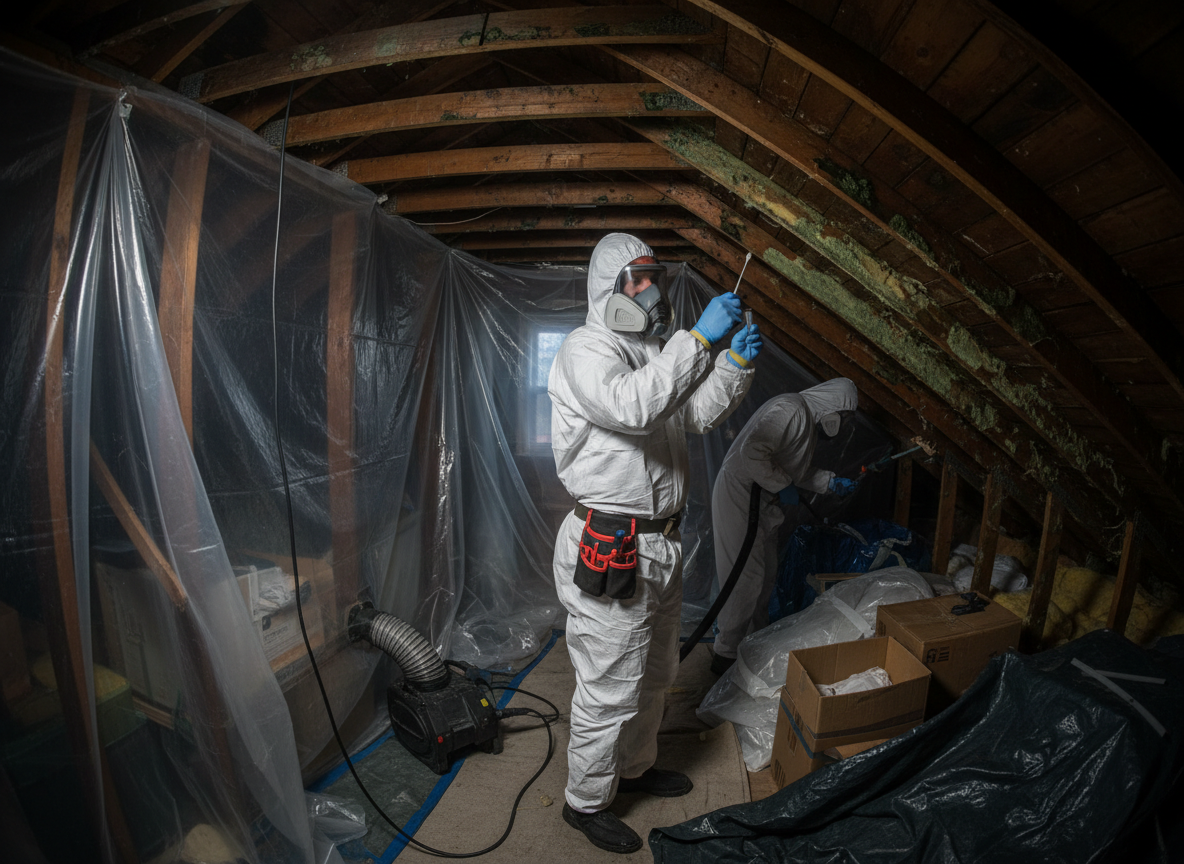
Removal work in these attics requires isolating the space from living areas below because many Keene properties have open ceiling designs or cathedral sections that allow spores to drift. We use negative air machines vented through roof jacks and remove affected insulation in sealed bags rather than dragging it through the house. After source correction we treat remaining sheathing with EPA-registered antimicrobials chosen for the dry climate so residues do not re-activate during the next temperature swing. Final clearance testing confirms spore counts match outdoor baselines before new insulation is installed.
Homeowners in Keene frequently discover attic mold after noticing musty odors in upstairs rooms during the first cool nights of fall. The combination of summer heat drying out materials then winter moisture re-wetting them creates cycles that standard bathroom fans cannot address. We always check the roof deck for previous leaks around plumbing vents and turbine ventilators common on Tehachapi-adjacent homes because unresolved roof issues will recreate the problem within one season.
Code requirements in Kern County call for proper attic ventilation ratios when insulation is disturbed so we document existing net free vent area before any work begins. This step prevents future callbacks when inspectors review permits for larger remediation jobs.
Technician insight
In Keene the thing that catches most people out with attic mold testing and removal is the way winter nights pull moisture back into attics that baked dry all summer. Homes along Woodford-Tehachapi Road often have turbine vents that spin but do not move enough air once insulation settles, so growth starts on the north-facing decking first. Skipping a full moisture map before removal almost always leaves hidden pockets that return the next cool season.
Hidden growth behind settled insulation
A Keene homeowner noticed a musty smell in an upstairs bedroom after the first cool nights. Inspection found condensation on the north roof deck where older batts had compressed and blocked ridge vent flow. We isolated the attic, removed the wet insulation in sealed bags, treated the sheathing, and restored ventilation ratios to match Kern County requirements. Clearance samples matched outdoor levels and the odor did not return.
How it works
- 1
Initial Assessment
Technician arrives within hours, performs moisture mapping and borescope inspection through existing access in Keene attics.
- 2
Containment Setup
Negative air and sealed pathways isolate the attic from living spaces to protect Kern County homes during removal.
- 3
Material Removal
Affected insulation and debris are bagged on site and removed without dragging through hallways or stairs.
- 4
Treatment and Drying
Sheathing is treated and dehumidifiers run until moisture readings meet industry dry standards for the local climate.
- 5
Clearance Testing
Air samples confirm spore levels match outdoor baselines before re-insulation and homeowner re-entry.
Pricing
Pricing depends on attic size, extent of growth, and insulation type; we provide an upfront written scope after inspection.