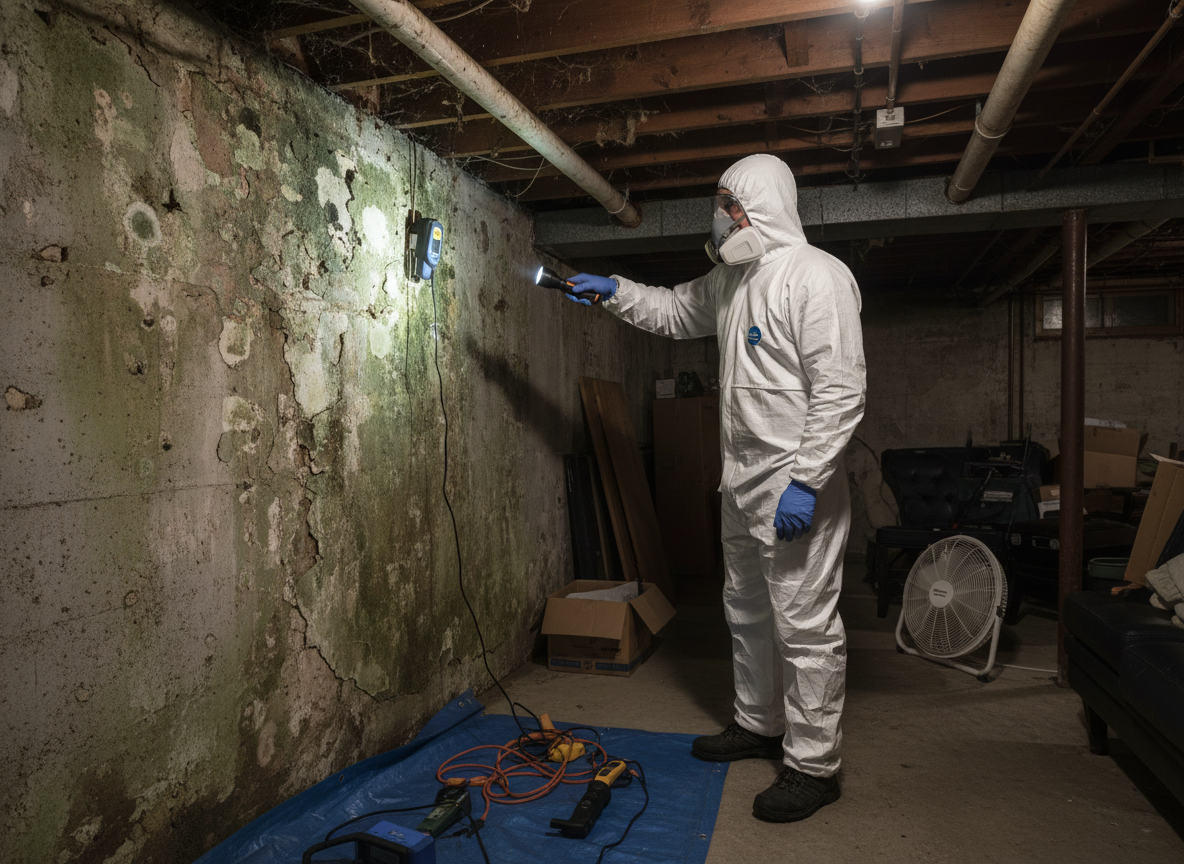
Keene sits in Kern County with a Mediterranean climate of hot dry summers and cool winters that drive temperature swings. These swings create condensation on basement walls and slabs in homes built along the Tehachapi corridor. Older ranch-style houses common here often lack modern vapor barriers, allowing ground moisture from seasonal rain to migrate upward. A proper inspection checks not only visible surfaces but also behind stored items, HVAC returns, and along foundation seams where cool air pools.
Inspection begins with moisture metering at multiple depths and thermal imaging to locate cold spots that signal hidden water. In Keene properties near the Woodford-Tehachapi corridor, inspectors pay special attention to crawlspace vents that pull in winter fog and to sump areas that can back up during rare heavy rains. Samples are taken only when discoloration or musty odors suggest active growth, then sent for lab analysis to identify species that thrive in the region’s fluctuating humidity.
Homeowners in surrounding Tehachapi foothills frequently overlook how summer heat dries surface mold while leaving roots intact inside wall cavities. Our process flags these conditions early so remediation stays contained to the basement rather than migrating into living spaces above. Every inspection includes a written map of affected zones and recommendations tailored to the home’s age and construction type found throughout Kern County.
Technician insight
In Keene the thing that catches most people out with Basement mold inspection is the cool winter nights pulling moisture through older slab foundations along the Tehachapi side of Kern County. Homeowners seal the obvious vents but miss how daytime heat then drives that trapped vapor into wall cavities where it stays hidden until summer.
Hidden Condensation in Keene Ranch Basement
A homeowner near Woodford-Tehachapi Rd noticed a musty smell after the first cool nights of fall. Inspection found condensation along the north foundation wall where winter air entered through unsealed vents. Thermal scans confirmed cold spots behind stored boxes. Containment barriers were placed and a targeted drying plan was issued before growth could spread upward into the main floor.
How it works
- 1
Site Walkthrough
Technician arrives at the Keene address and reviews visible signs of moisture entry points around the foundation and vents.
- 2
Moisture Mapping
Readings are taken on walls, floors, and stored materials using meters calibrated for the area’s typical concrete and wood combinations.
- 3
Thermal Imaging Scan
Infrared camera identifies temperature differentials caused by cool winter air meeting warmer basement surfaces common in Kern County homes.
- 4
Sample Collection If Needed
Air or surface samples are gathered only when evidence suggests active growth, then documented for lab review.
- 5
Findings Report
Detailed map and next-step guidance is provided same day, including any immediate containment steps for the property.
Pricing
Upfront quote given after walkthrough; final cost depends on square footage and number of samples required.