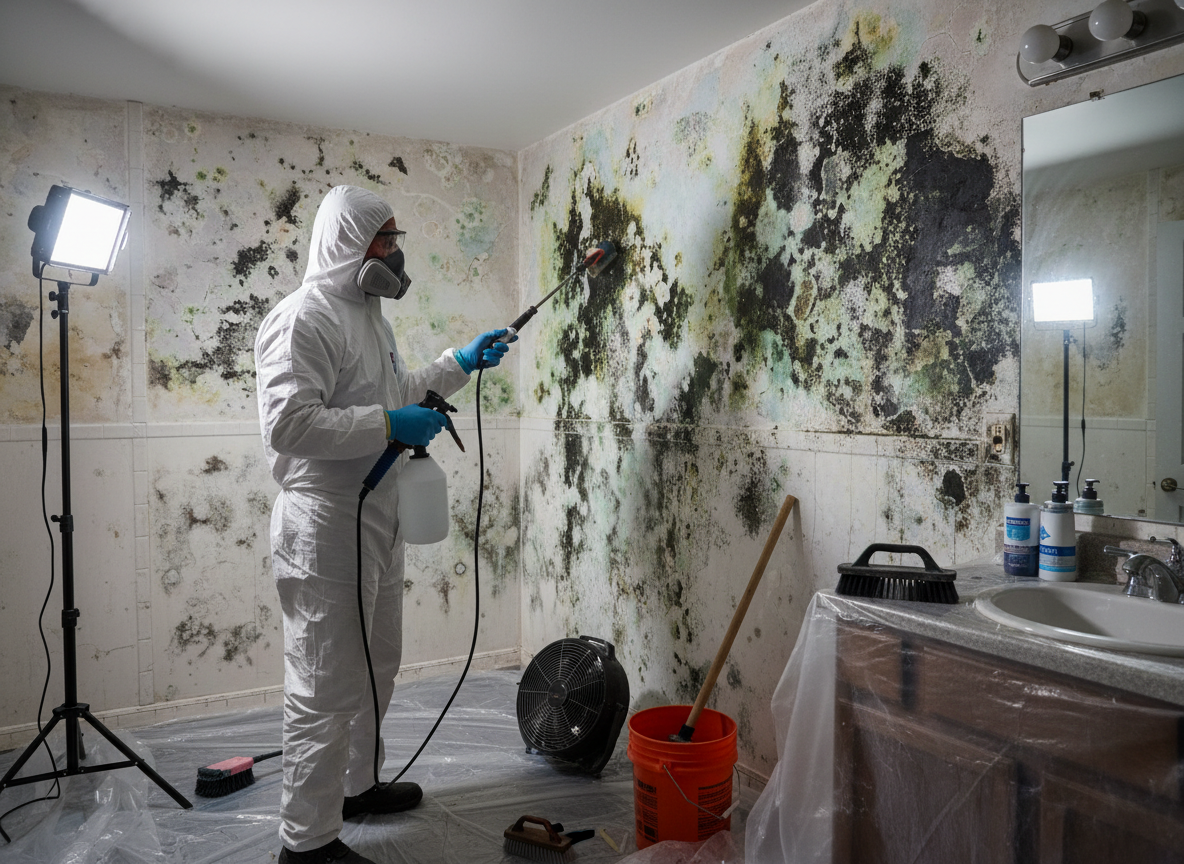
Keene homes built decades ago often feature small bathrooms with limited exhaust and single-pane windows that sweat during cool winter nights. When residents run hot showers in the Mediterranean climate's dry summers followed by sudden temperature drops, moisture lingers behind fiberglass tubs and under vinyl flooring. We open walls only where moisture meters confirm saturation, remove affected drywall or backer board, and treat framing with antimicrobial solutions before reinstalling moisture-resistant materials.
Many properties near the Woodford-Tehachapi corridor sit on sloped lots with poor grading, allowing irrigation or winter rain to push water against foundation walls that connect to bathroom plumbing chases. This creates hidden colonies that surface months later as musty odors. Our crews use negative-air machines during removal to keep spores from migrating into adjacent bedrooms, then run dehumidifiers calibrated to Kern County's typical 30-40 percent indoor humidity target.
We always check the shower pan liner and toilet flange seals because older Keene construction frequently used cast-iron drains that corrode and leak slowly. Replacing just the visible caulk never solves the source. After remediation we install higher-CFM exhaust fans vented to the exterior and recommend quarterly filter checks during the hot season when AC units pull more humidity through the house.
Technician insight
In Keene the thing that catches most people out with bathroom mold removal service is the way cool winter nights pull condensation straight through single-pane glass and into the wall cavity behind the tub; homeowners keep painting over the black spots on the baseboard while the real colony sits on the back side of the drywall where the shower valve leaks.
Hidden growth behind tub in Keene home
A homeowner near the Woodford-Tehachapi intersection noticed a persistent musty smell after winter rains. We found the shower valve had been dripping for months into the wall cavity. We opened the affected section, removed saturated drywall and insulation, treated the studs, and reinstalled with new moisture-resistant board and a better-sealed valve. Odor gone and no recurrence after six months.
How it works
- 1
Inspection and Moisture Mapping
We use meters and infrared cameras to locate every wet spot in the bathroom without guessing.
- 2
Containment Setup
Plastic barriers and negative air machines isolate the work area from the rest of the Keene home.
- 3
Removal of Affected Materials
We cut out moldy drywall, baseboard, and insulation, bagging everything before it leaves the room.
- 4
Antimicrobial Treatment and Drying
Framing and subfloors receive EPA-registered treatments followed by industrial drying until readings drop below 15 percent.
- 5
Final Clearance and Prevention
Post-remediation testing confirms safe levels, then we reinstall finishes and advise on ventilation upgrades.
Pricing
Upfront quotes after on-site inspection; final cost depends on how far moisture traveled behind walls and whether subfloor replacement is required.