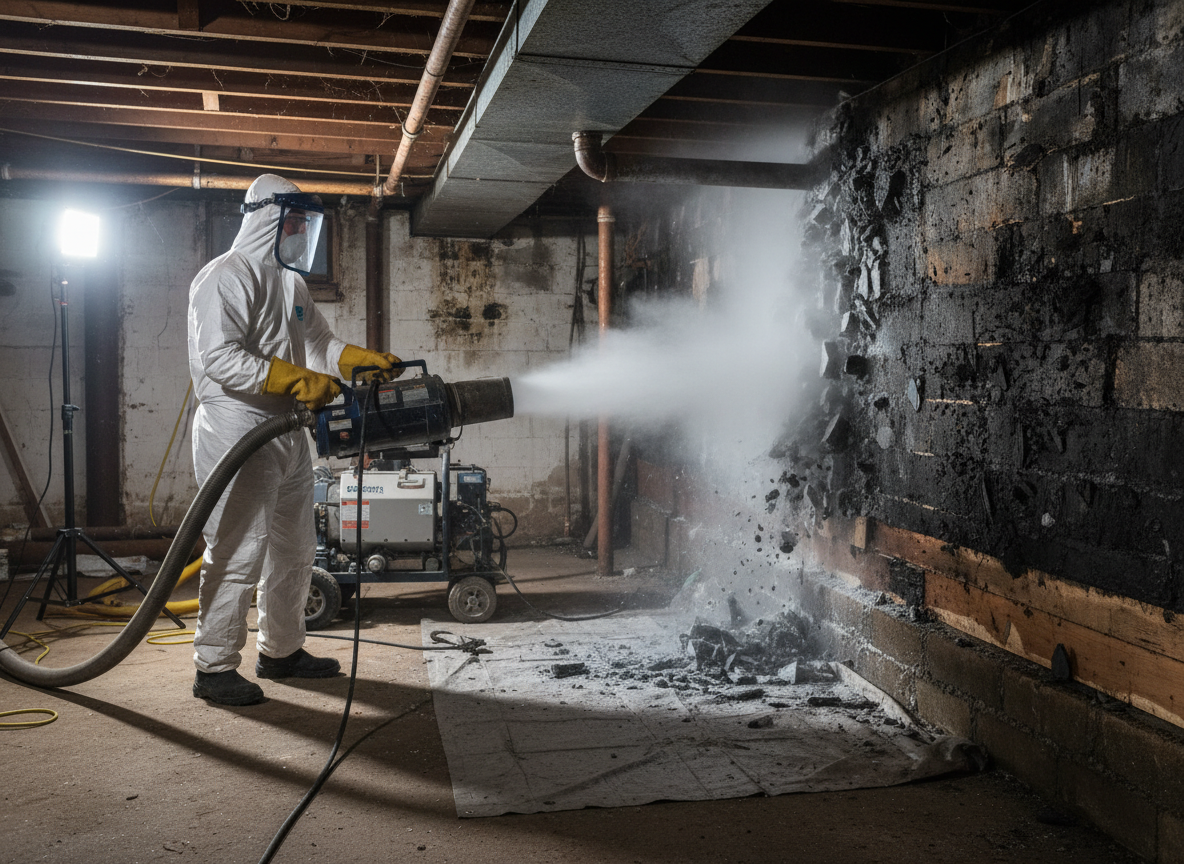
Dry ice blasting removes mold from wood framing and concrete in Keene homes without introducing moisture that can restart growth during cool winter months. The process fires solid CO2 pellets at 300-400 psi to lift surface mold while the pellets sublimate, leaving no residue that could affect indoor air in tightly sealed Kern County residences. Older ranch houses along Woodford-Tehachapi Road often have unsealed crawl spaces where summer heat drives vapor upward, then winter cooling condenses it against joists, creating the exact conditions dry ice blasting addresses without sanding or chemicals that could damage historic plaster.
In Tehachapi-adjacent neighborhoods, stucco exteriors and post-1960s additions frequently trap condensation behind insulation when temperatures swing from daytime highs near 95°F to overnight lows in the 40s. Dry ice blasting reaches into these cavities without disassembly, but technicians must first verify that electrical boxes and HVAC returns are masked because the high-velocity stream can dislodge loose wiring or push spores into ducts. Homeowners in Keene sometimes attempt DIY dry ice methods and miss the thermal shock that can crack older terra-cotta flue liners common in local fireplaces.
Kern County building practices from the 1970s left many attics with single-layer vapor barriers that fail when irrigation runoff from surrounding orchards raises soil moisture. Dry ice blasting cleans rafters and sheathing effectively here, yet crews must confirm that the home has positive attic ventilation before starting; otherwise displaced spores settle into living spaces once temperatures rise again. The method also works on metal ductwork without warping, a common substrate in Keene manufactured homes where traditional scraping would leave micro-scratches that collect dust and future mold.
Technician insight
In Keene, the thing that catches most people out with dry ice blasting mold is how quickly cool winter nights pull moisture back into the porous adobe and single-layer sheathing common along the Tehachapi corridor. Homeowners often seal the house tight after blasting, trapping the vapor that returns the next time temperatures swing.
Attic Mold After Irrigation Runoff
A Keene homeowner noticed musty smell in the hallway during a cool snap. Inspection found condensation on rafters above a 1978 addition where orchard runoff raised soil moisture. Dry ice blasting cleaned the framing and sheathing without disassembly. Follow-up readings showed stable levels once attic vents were cleared for the coming summer heat.
How it works
- 1
Site Assessment
Inspect affected wood, stucco, and ductwork in Keene homes to map moisture sources tied to seasonal temperature swings.
- 2
Containment Setup
Seal rooms and HVAC returns to prevent spore migration into living areas during blasting.
- 3
Dry Ice Application
Blast mold from framing and concrete using calibrated pressure suited to local older construction materials.
- 4
Post-Clean Verification
Check surfaces and air quality to confirm removal before restoring ventilation in Kern County homes.
Pricing
Cost depends on square footage, access difficulty in older Keene construction, and whether HVAC cleaning is needed; upfront quotes provided on site.