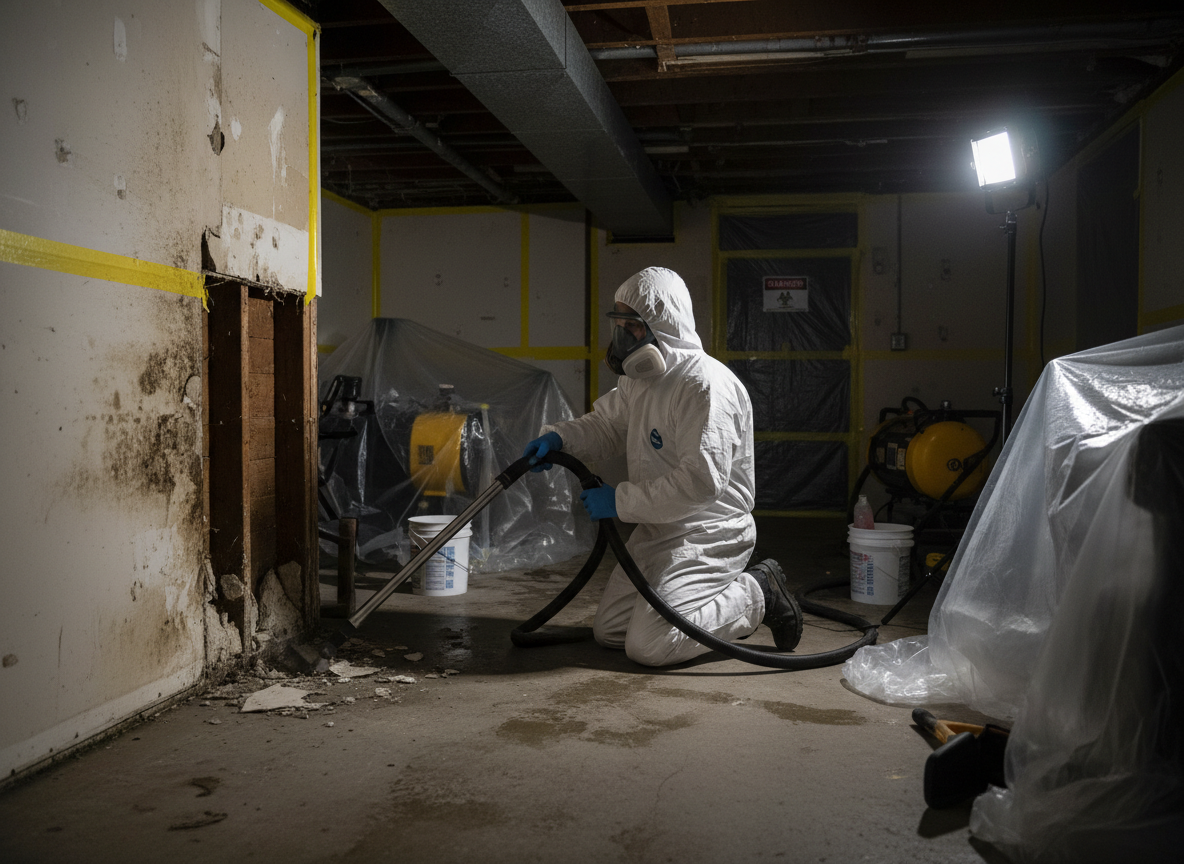
Mold abatement in Keene often starts with identifying hidden growth in crawlspaces and attics where cool winter moisture meets hot summer heat buildup. Older homes common throughout Kern County near Tehachapi frequently have unsealed foundations that allow water intrusion after rare heavy rains, creating persistent damp pockets behind drywall and under flooring. Technicians map airflow patterns specific to the area's terrain to prevent spores from spreading during removal.
Containment barriers and negative air machines become essential when working in single-story ranch homes typical of Keene, where open floor plans can quickly circulate contaminants to living areas. Abatement crews remove affected insulation and treat wood framing with antimicrobial solutions that account for the dry, dusty soil conditions in Kern County which can complicate cleanup. Post-remediation verification focuses on moisture levels that spike during winter temperature drops.
Edge cases include mold in HVAC ducts serving homes along Woodford-Tehachapi Road, where temperature swings force condensation inside metal lines. Abatement here requires shutting down systems entirely and sealing registers before any demolition begins to avoid cross-contamination into adjacent bedrooms. Local terrain with gentle slopes can direct runoff toward foundations, so crews always check grading before final clearance.
Homeowners should expect full removal of porous materials like carpet padding once saturation exceeds 1 inch, as partial cleaning rarely holds in the region's variable humidity. Documentation of each affected room helps track progress through multi-day projects common when infestations reach subflooring in older Kern County properties.
Technician insight
In Keene, the thing that catches most people out with mold abatement is how the cool winters pull moisture into uninsulated crawlspaces of 1960s-1970s homes while the hot summers bake it back into the framing, so simply drying the surface never stops regrowth without full material removal.
Crawlspace Growth After Winter Rains
A Keene homeowner noticed musty odors in the living room during spring. Inspection found water tracking from the sloped yard into the unsealed crawlspace under the 1972 ranch house, saturating insulation along the north wall. Crews contained the space, removed wet materials, treated the joists, and added vapor barrier sections before restoring airflow.
How it works
- 1
Initial Assessment
Inspect all accessible areas including attics, crawlspaces, and HVAC in Keene homes to locate moisture sources tied to winter cooling and summer heat cycles.
- 2
Containment Setup
Install plastic barriers and negative air units to isolate work zones and protect living spaces common in single-story Kern County residences.
- 3
Material Removal
Cut out and bag affected drywall, insulation, and flooring while treating framing with solutions suited to the dry local soil and temperature swings.
- 4
Drying and Verification
Run dehumidifiers and fans until moisture readings stabilize, then retest air quality before restoring access in Tehachapi-adjacent properties.
- 5
Prevention Measures
Apply sealants and improve ventilation points to counter the Mediterranean climate's winter moisture retention in older Keene foundations.
Pricing
Costs depend on square footage affected, access difficulty in older homes, and whether HVAC cleaning is required; upfront quotes provided after inspection.