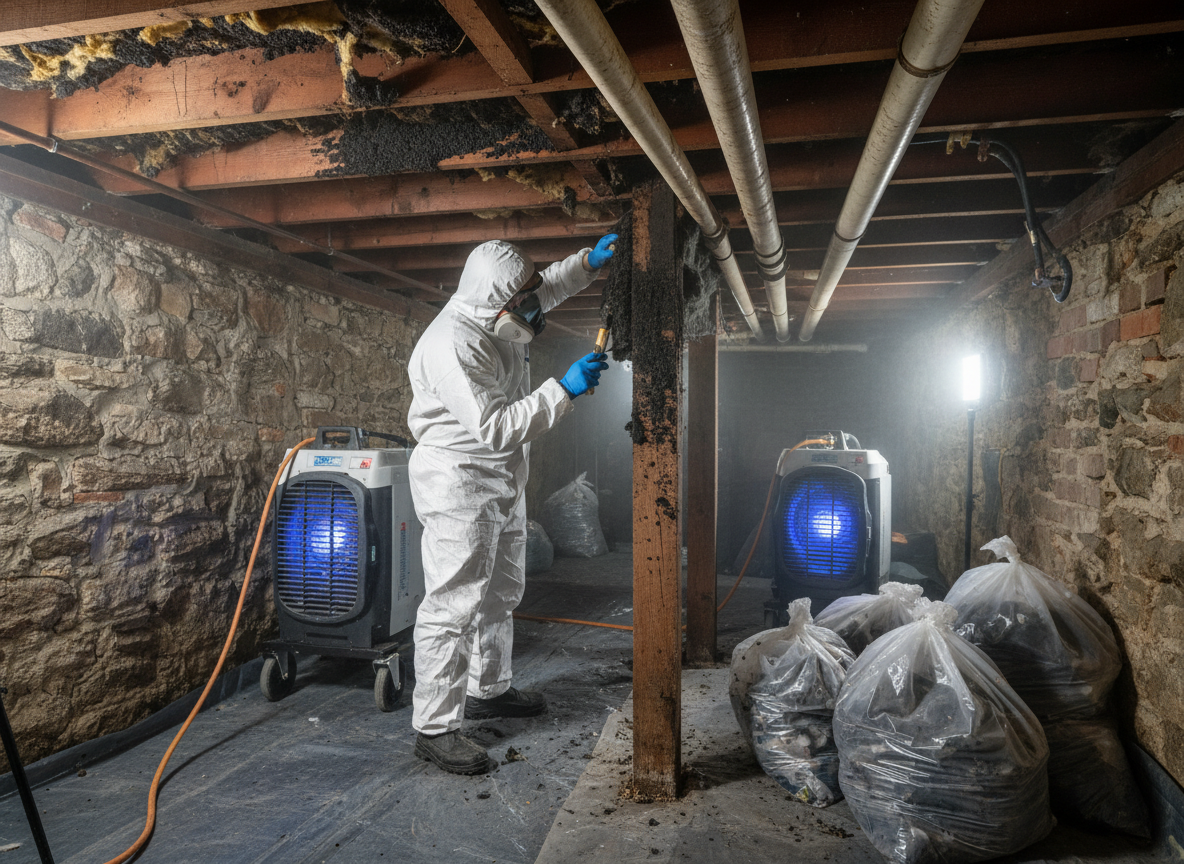
Keene sits in Kern County with a Mediterranean climate that brings hot dry summers and cool winters with occasional rain. These swings drive condensation in crawlspaces and attics of older homes along Woodford-Tehachapi Road and nearby routes to Tehachapi. Homes here often feature raised foundations or slab construction from the mid-20th century that trap moisture when ventilation is limited. Mold cleanup near me requires checking under flooring and behind drywall where temperature changes create hidden growth that standard visual checks miss.
Local terrain includes rolling hills and variable drainage that channels winter runoff toward foundations. When soil stays damp against stucco or wood siding, water migrates into wall cavities. Technicians must map moisture with meters rather than relying on visible stains alone because Kern County dust can mask early signs. Containment protocols stay tight to prevent spores from spreading through single-story layouts common in the area.
Materials in these homes frequently include older insulation and particleboard that absorb and hold moisture longer than modern products. Removing affected sections demands careful disassembly to avoid disturbing adjacent areas still dry. Post-remediation verification includes air sampling because residual humidity from summer heat can restart growth within weeks if not fully addressed.
Edge cases arise when mold appears after roof leaks during rare heavy rains or from irrigation overspray near Tehachapi borders. Crews isolate HVAC systems early because ductwork in many Keene residences runs through attics that heat rapidly in summer, pushing spores throughout the house.
Technician insight
In KEENE, the thing that catches most people out with mold cleanup near me is how cool winter nights followed by hot summer days create repeated condensation cycles inside crawlspaces of homes built before the 1980s along Woodford-Tehachapi Road. Homeowners often treat only the visible spot on the floor while the real source stays in the soil moisture against the foundation.
Hidden Crawlspace Growth After Winter Rains
A homeowner near the Tehachapi border noticed a musty odor after cool season storms. Inspection revealed mold under subflooring caused by poor drainage typical of Kern County terrain. The crew contained the space, removed saturated insulation, treated joists, and dried the area over several days. Follow-up testing confirmed levels returned to normal and no further growth occurred once ventilation was improved.
How it works
- 1
Initial Assessment
Technician arrives within hours, inspects all accessible areas including crawlspaces and attics common in Keene homes, and uses moisture meters to locate hidden water sources tied to local drainage patterns.
- 2
Containment Setup
Plastic barriers and negative air machines isolate the work zone to keep spores from traveling through typical single-story floor plans found along Woodford-Tehachapi Road.
- 3
Removal and Cleaning
Affected materials are removed, surfaces treated with EPA-registered antimicrobials, and HVAC systems cleaned if spores have circulated due to temperature swings between hot summers and cool winters.
- 4
Drying and Verification
Industrial dehumidifiers run until readings meet industry standards, followed by clearance testing before barriers come down.
- 5
Final Walkthrough
Homeowner receives a written report noting any ongoing moisture risks specific to Kern County soil and climate.
Pricing
Cost depends on square footage affected, access difficulty in crawlspaces or attics, and whether HVAC cleaning is required after seasonal moisture events.