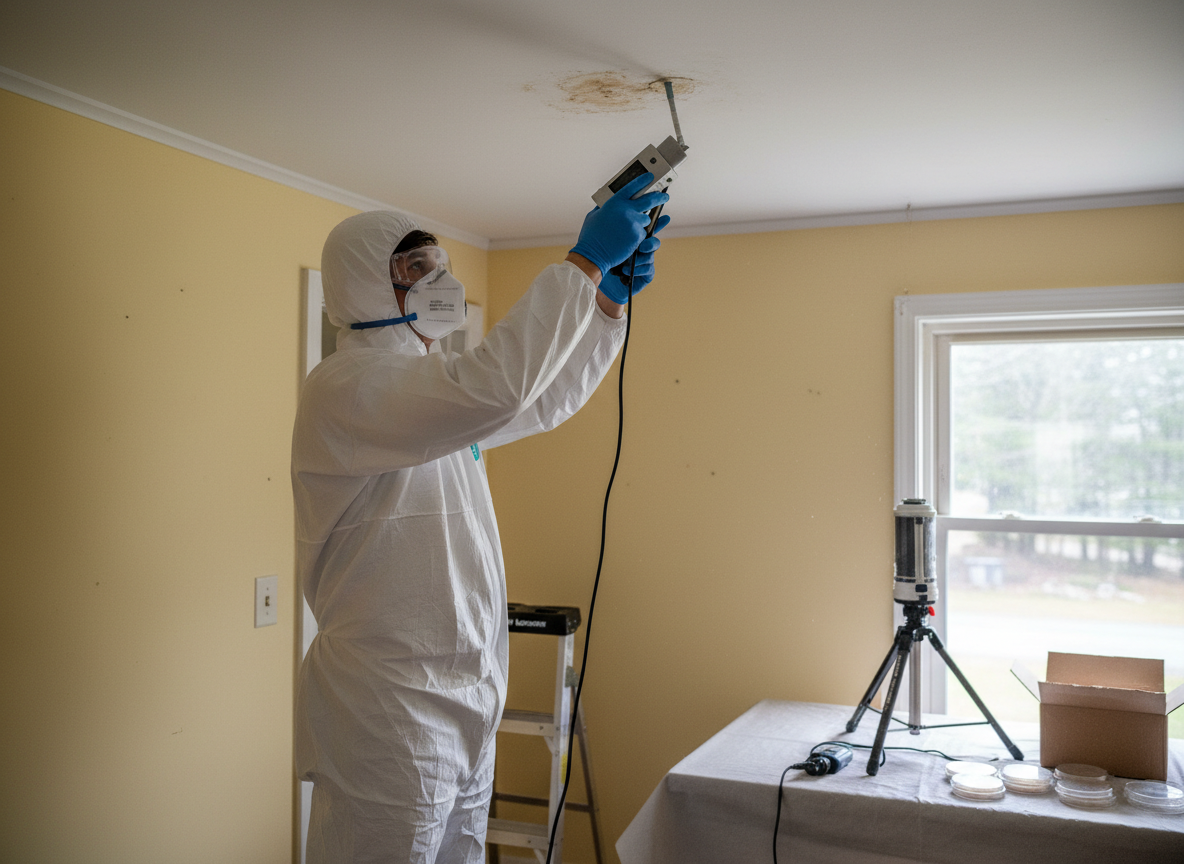
Mold spore testing in Keene requires understanding how the Mediterranean climate drives growth patterns. Hot dry summers push moisture into wall cavities and attics while cool winter rains create leaks around older ranch-style roofs common on Woodford-Tehachapi Road properties. Technicians use calibrated air pumps drawing 75 liters per minute alongside tape-lift and swab samples to capture both viable and non-viable spores that settle in crawl spaces and HVAC returns typical of 1960s-1980s Kern County construction.
Edge cases appear regularly near Tehachapi where wind-driven rain infiltrates single-pane windows and poorly sealed garage-to-house transitions. These conditions allow Stachybotrys and Aspergillus to colonize behind baseboards without visible signs on the surface. Testing protocols include outdoor baseline samples because regional agriculture and dust storms can skew indoor counts. Results guide whether remediation stays limited to one room or expands to whole-house containment.
California building codes require proper documentation of moisture sources before any remediation begins. Homeowners in Keene often discover that failed vapor barriers under concrete slabs or unsealed evaporative cooler ducts introduce constant humidity that standard visual inspections miss. Spore trap analysis combined with moisture metering at multiple depths in drywall and subflooring provides the data needed to prevent repeat outbreaks after the first winter storm cycle.
DIY kits frequently under-sample because they lack the volume and multiple-location strategy required in sprawling rural properties. Professional reports include genus-level identification and concentration comparisons against outdoor controls so residents know whether elevated Penicillium in a bedroom closet stems from stored items or an active roof leak above the master bath.
Technician insight
In KEENE, the thing that catches most people out with mold spore testing is how cool winter rains pool against the north side of older single-story homes built on the slight slope toward Tehachapi. Those foundations stay damp for weeks, feeding hidden growth under carpet pads that air samples from the center of the room never catch unless you specifically test the baseboard line.
Hidden Growth in North-Facing Bedroom
A Keene homeowner noticed musty odors after winter storms but no visible mold. Testing showed elevated Aspergillus spores near the exterior wall baseboards. Samples revealed a slow roof leak above the eave that had saturated insulation without reaching the ceiling surface. Containment and targeted drying resolved the source before spores spread into the HVAC system serving the rest of the house.
How it works
- 1
Site Evaluation
Walk-through of the Keene property to map moisture history, HVAC layout, and previous water events while noting construction type common to Kern County homes.
- 2
Sample Collection
Air spore traps, surface tape lifts, and bulk material samples taken from multiple indoor zones plus one outdoor control location near Tehachapi.
- 3
Laboratory Analysis
Samples sent to an accredited lab for spore identification and count comparison against regional outdoor baselines.
- 4
Report Delivery
Written findings with location-specific recommendations delivered within 48 hours, including suggested next steps for any elevated readings.
Pricing
Pricing varies by number of samples and property size; contact for current rates based on your specific Keene location.