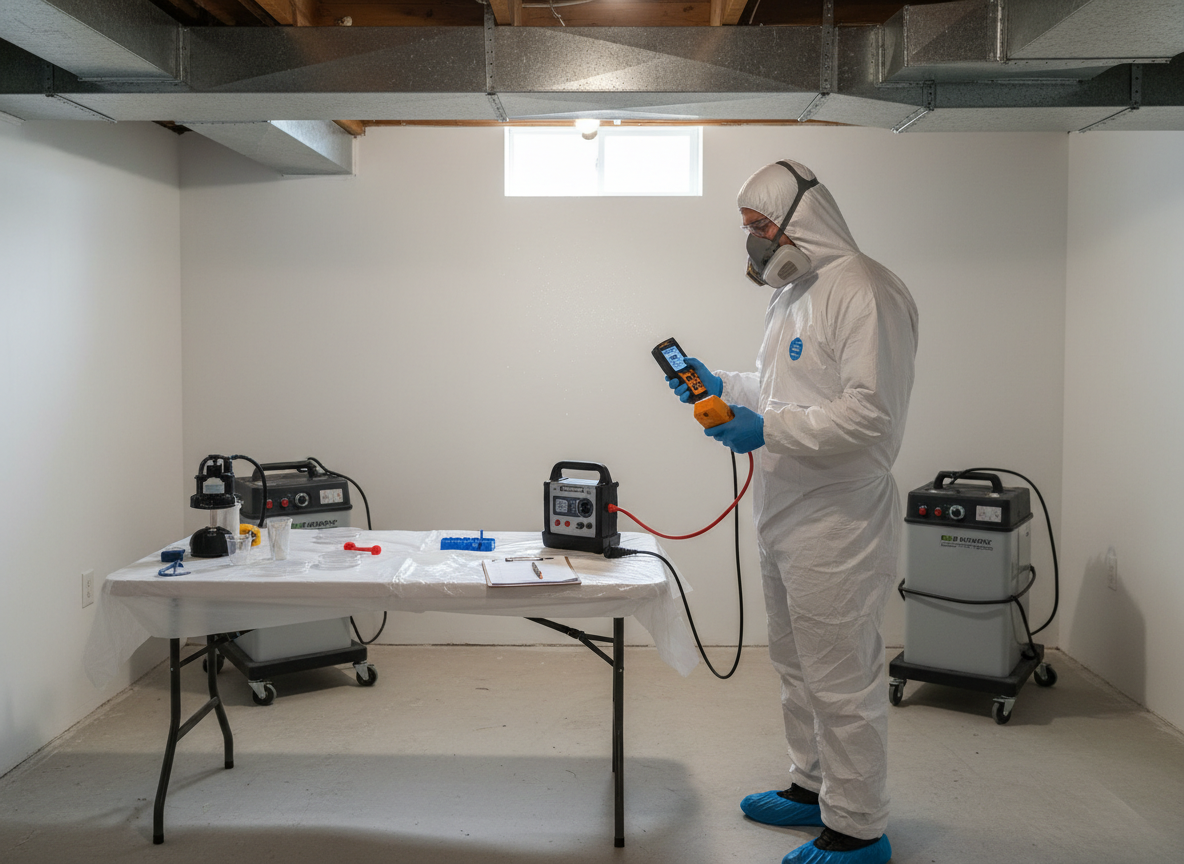
After mold remediation in Keene homes, post remediation testing checks whether spores have been reduced to acceptable levels before any rebuilding begins. Technicians collect air samples from multiple rooms and compare them to outdoor baselines, while surface swabs target areas like drywall edges or HVAC registers that are hard to reach during cleanup. In Kern County properties built before the 1990s, older framing and limited insulation can trap residual moisture that only shows up once walls are opened, so testing must cover both living spaces and crawl areas.
Mediterranean weather patterns here, with hot dry summers followed by cool winter nights, create condensation cycles that affect testing accuracy. Samples taken too soon after remediation can miss hidden growth that reactivates when temperatures drop, while waiting too long risks new moisture from seasonal rains near Tehachapi. Proper protocol requires at least two rounds of testing on larger jobs and documentation of humidity readings at each sample point to rule out false negatives.
Homeowners along Woodford-Tehachapi Road often request testing after roof leaks or plumbing repairs because those events leave behind conditions that standard visual checks miss. The process includes chain-of-custody forms for lab submission and a written report that lists spore counts room by room, helping owners decide whether further containment is needed before drywall is replaced.
Technician insight
In Keene, the thing that catches most people out with post remediation mold testing is how the cool winter nights after hot summer days leave hidden moisture in the crawl spaces of older Kern County homes along the Tehachapi corridor, so a single round of samples often misses growth that only shows once temperatures swing again.
Clearance testing after pipe leak remediation
A homeowner near Woodford-Tehachapi Road had a bathroom leak repaired and mold removed from subfloor framing. We collected air samples from the bathroom, adjacent bedroom, and crawl space plus an outdoor control. Lab results showed indoor counts below outdoor levels with no target species present, allowing drywall reinstallation to proceed without further containment.
How it works
- 1
Site Walkthrough
Technician inspects all previously affected areas and notes any remaining moisture sources or construction changes since remediation.
- 2
Sample Collection
Air cassettes and tape lifts are taken from inside and outside the home, plus swabs from suspect surfaces, with locations logged on a floor plan.
- 3
Laboratory Analysis
Samples are sent to an independent lab for spore identification and count comparison against outdoor controls.
- 4
Report Delivery
A written clearance report is provided with spore data, humidity readings, and any recommendations for additional work.
Pricing
Pricing varies by number of samples and property size; most Keene jobs require three to six samples for reliable clearance data.