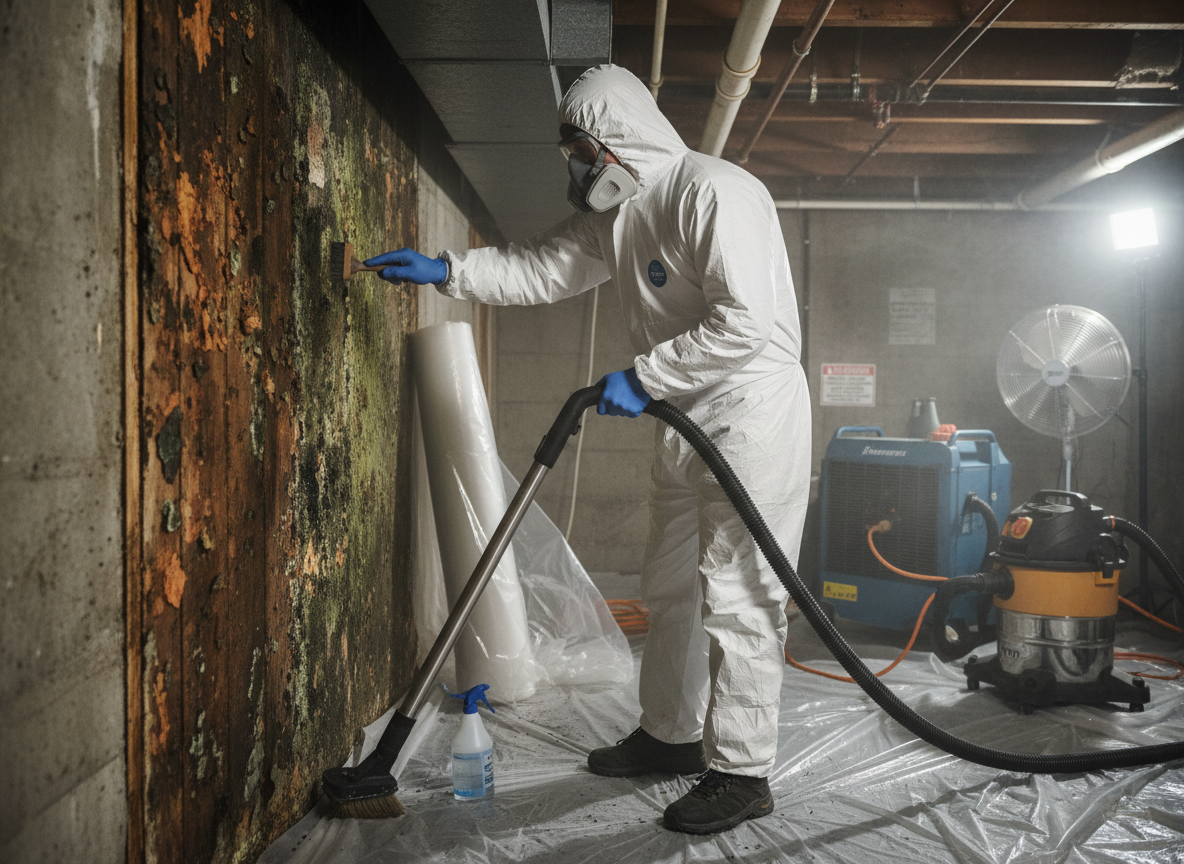
Keene sits in Kern County at the edge of the Tehachapi range where Mediterranean summers stay hot and dry while cool winters bring occasional rain that soaks into crawlspaces and wall cavities of older single-story ranch houses. These homes often have unvented attics and dirt-floor crawlspaces that trap moisture after storms, allowing Stachybotrys and other toxic species to colonize drywall, insulation and wood framing. Removal starts with negative-air containment to keep spores from spreading into living areas, followed by HEPA vacuuming, antimicrobial application and removal of saturated materials that cannot be salvaged.
Access is frequently the largest variable on local jobs. Many Keene properties sit on sloped lots where irrigation lines run under slabs or along foundations, creating hidden leaks that feed mold behind baseboards and in subflooring. Technicians must cut inspection openings, document moisture readings with meters, and dispose of contaminated debris at Kern County-approved facilities. Homeowners are advised against disturbing visible growth themselves because disturbing dry mold releases spores that can travel through the open floor plans typical of mid-century ranch homes.
Clearance testing follows every project to confirm spore levels have returned to outdoor baselines before reconstruction. In winter, when temperatures drop and indoor heating runs, any remaining moisture can reactivate colonies, so final documentation includes written drying verification and recommendations for improved ventilation or dehumidification suited to the local climate swings.
Technician insight
In Keene the thing that catches most people out with toxic mold removal is irrigation leaks along the foundation of 1960s-70s ranch houses on sloped lots near Tehachapi Road. The dry Mediterranean summers mask the problem until winter rains or constant drip lines push moisture into the subfloor, and homeowners often miss it because the mold stays hidden under carpet pads or behind exterior siding.
Hidden Growth After Winter Rains
A Keene homeowner noticed a musty smell in the hallway after heavy January rains. Inspection found Stachybotrys growing on the back side of drywall in a bedroom closet where an irrigation line had seeped under the slab. Containment was set, the affected wall section removed, and the subfloor dried before new materials were installed. Clearance testing confirmed levels matched outdoor baselines.
How it works
- 1
Initial Assessment
On-site inspection with moisture meters and borescope checks in crawlspaces, attics and wall cavities of Keene homes to map the full extent of toxic growth.
- 2
Containment Setup
Installation of negative-air machines and plastic barriers to isolate the work zone and protect the rest of the property from spore migration.
- 3
Removal and Cleaning
Physical removal of contaminated materials, HEPA vacuuming of surfaces, and application of EPA-registered antimicrobials to remaining structural elements.
- 4
Clearance and Documentation
Post-remediation air sampling and visual inspection, followed by a written report for homeowners and any required Kern County records.
Pricing
Cost depends on square footage affected, accessibility of crawlspaces or attics, and whether structural materials must be replaced.